Latest guide
Newest publication
Why a Valid Sitemap Does Not Guarantee Indexing
Learn why technically valid sitemap entries may remain unindexed and how content quality, canonical selection, crawl access and duplication affect the outcome.
Practical explanations of crawling, indexing, sitemaps, site architecture, and repeatable technical checks.
Learn why technically valid sitemap entries may remain unindexed and how content quality, canonical selection, crawl access and duplication affect the outcome.

Understand the difference between a sitemap that lists page URLs and a sitemap index that organises multiple sitemap files.

A practical guide to checking sitemap syntax, URL validity, response codes, canonical signals, indexability, duplicates and internal-link coverage.

Learn which canonical and indexable URLs belong in an XML sitemap and why redirects, duplicates, noindex pages and error responses should usually be excluded.

Understand why a URL blocked from crawling can still appear in search results and why robots.txt should not be treated as a dependable noindex method.

Learn how to test crawl access by checking HTTP responses, robots.txt rules, redirects, internal links, login barriers and JavaScript-rendered content.

When a page fails to appear in search results, crawling is only one possible issue. This guide explains discovery, crawling, rendering, canonical selection and indexing as separate stages.
Understand how to use sitemap lastmod dates accurately and why automatic or misleading timestamps can reduce their usefulness.

Learn how XML sitemaps are structured, what they communicate to search engines, and when a website should use one.
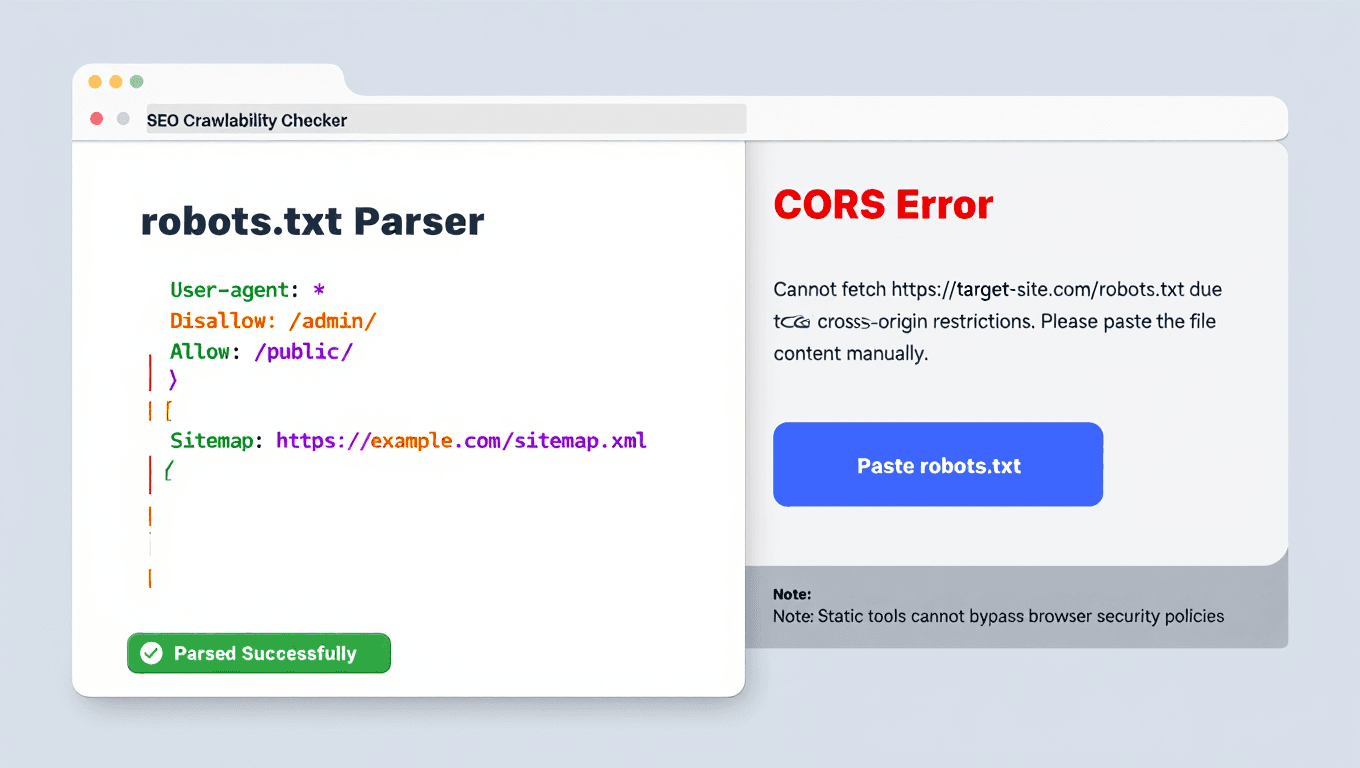
Review common robots.txt configuration errors that can block important content, waste crawl activity, or create misleading indexing expectations.
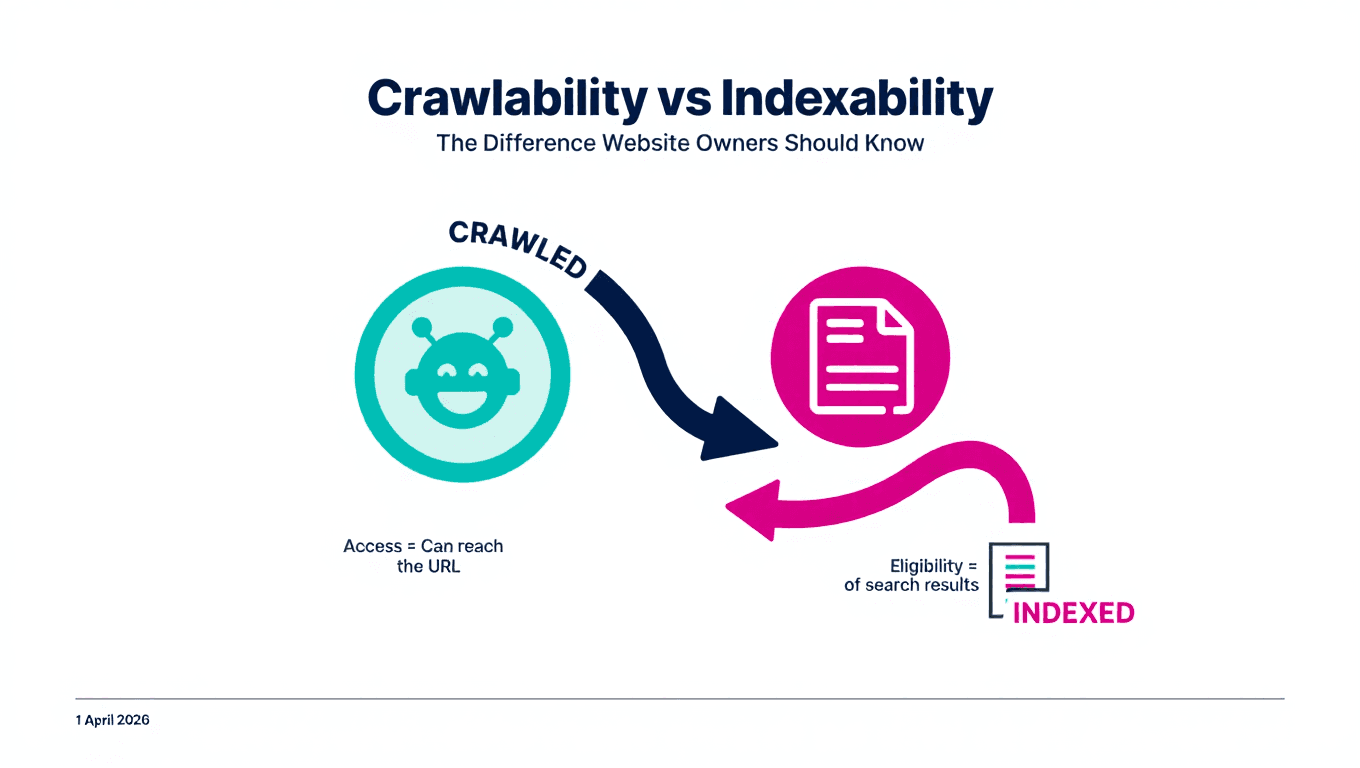
Understand the difference between pages that search engines can crawl and pages that they may choose to index.

Learn what crawlability means, why it matters for search engines, and how a website can make important pages easier to find.